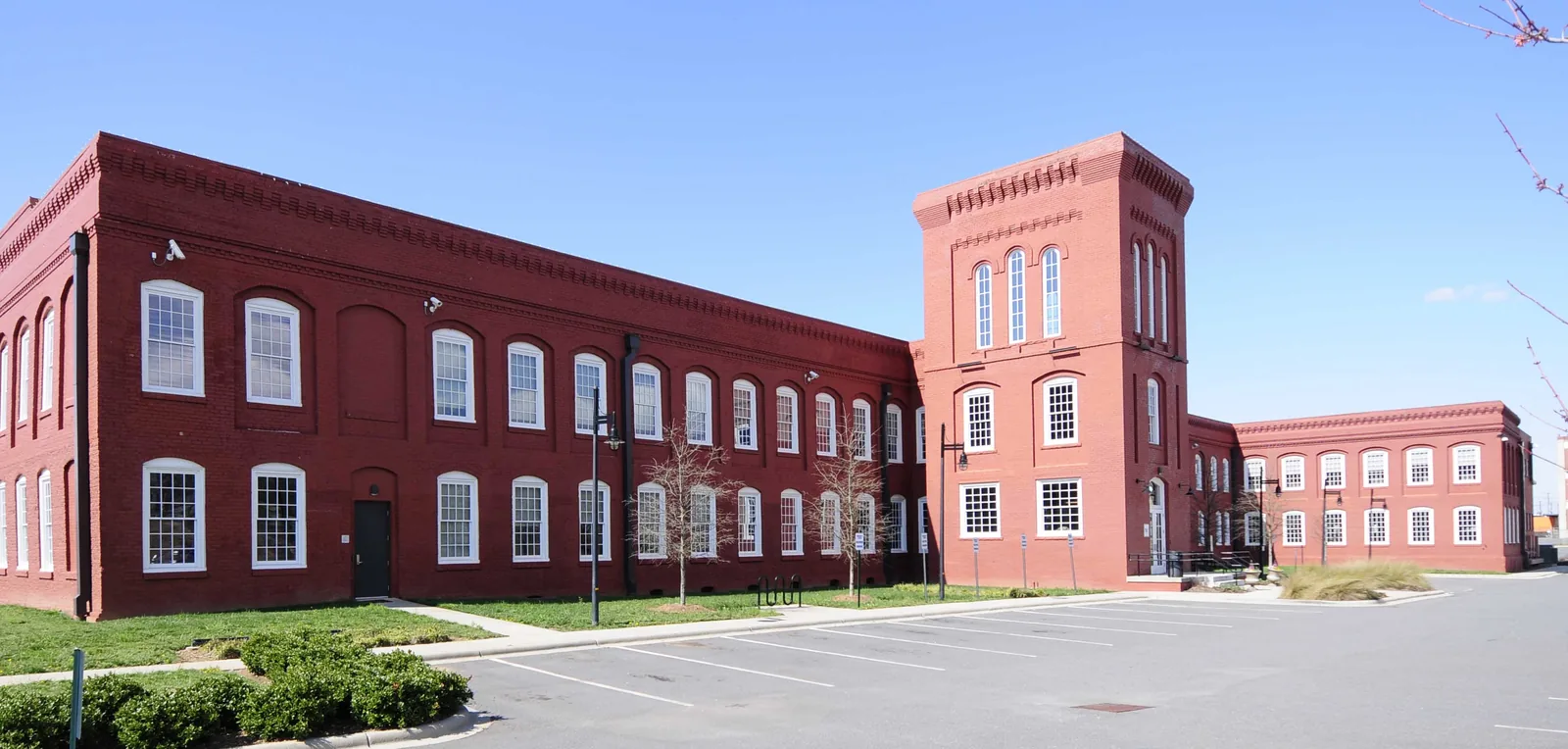
Rock Hill got its name in 1852 from a flinty hill railroad crews cut through. It has 28 National Register listings, from Tillman Hall to the Cotton Factory.
Last checked Oct. 12, 2026. Facts on this page come from the City of Rock Hill’s About Rock Hill and Historic Preservation pages, the National Park Service’s National Register of Historic Places data and Culture & Heritage Museums.
Rock Hill earned its name in 1852, when the Charlotte, Columbia and Augusta railroad was being built through the area. Rail crews ran into a small, flinty hill and dubbed the spot “Rock Hill.” A U.S. post office opened that year, which the city counts as its official beginning. The railroad brought business, and the city says the village was incorporated in 1892. Rock Hill has run under a council-manager government since 1915, the second South Carolina city to adopt that form.
Who to call
- Historic properties and design review: Rock Hill Planning and Development, Amy Britz, 803-329-5586
- Laurelwood Cemetery: the city’s Cemetery Services Division, cemetery@cityofrockhill.com
- Museum of York County: 803-981-9182
Historic districts
Six districts in Rock Hill are listed on the National Register of Historic Places:
| District | Where | Listed |
|---|---|---|
| Winthrop College Historic District | Oakland Avenue between Cherry Road and Stewart Avenue, on the Winthrop campus | 1987 |
| Rock Hill Downtown Historic District | Roughly South Oakland Avenue to East Main Street | 1991 |
| Charlotte Avenue-Aiken Avenue Historic District | Aiken Avenue from College to Charlotte avenues, and Charlotte Avenue from Aiken to Union avenues | 1992 |
| Marion Street Area Historic District | Marion Street from Hampton to Center streets | 1992 |
| Reid Street-North Confederate Avenue Area Historic District | Reid Street and North Confederate Avenue between East Main and East White streets | 1992 |
| Highland Park Manufacturing Plant and Cotton Oil Complex | 869 Standard St. and 732 and 737 E. White St. | 1992 |
The city enforces its own historic overlay rules in its districts: changes to the outside of a property need a Certificate of Appropriateness, and often a hearing before the Board of Historic Review, under the city’s Historic Design Guidelines (PDF).
Individual National Register listings
| Property | Address | Listed |
|---|---|---|
| White House | 258 E. White St. | 1969 |
| Ebenezer Academy | 2132 Ebenezer Road | 1977 |
| Tillman Hall | Winthrop campus, Oakland Avenue | 1977 |
| McCorkle-Fewell-Long House | 639 College Ave. | 1980 |
| Withers Building | Oakland Avenue, Winthrop campus | 1981 |
| Anderson House | 227 Oakland Ave. | 1982 |
| Stokes-Mayfield House | 353 Oakland Ave. | 1984 |
| U.S. Post Office and Courthouse | 102 Main St. | 1988 |
| Afro-American Insurance Company Building | 558 S. Dave Lyle Blvd. | 1992 |
| First Presbyterian Church | 234 E. Main St. | 1992 |
| Hermon Presbyterian Church | 446 Dave Lyle Blvd. | 1992 |
| Mount Prospect Baptist Church | 339 W. Black St. | 1992 |
| Rock Hill Cotton Factory | 215 Chatham St. (enlarged in 2008 to 130 W. White St.) | 1992 |
| People’s National Bank Building | 131-133 E. Main St. | 1999 |
| Nation Ford Fish Weir | In the Catawba River, upstream of the Nation Ford railroad trestle | 2007 |
| Bleachery Water Treatment Plant | Stewart Avenue | 2008 |
| Laurelwood Cemetery | Bordered by Laurel, W. White, Stewart and W. Main streets | 2008 |
| Rock Hill Body Company | 601 W. Main St. | 2008 |
| Rock Hill Printing and Finishing Company | 400 W. White St. | 2013 |
| Carroll Rosenwald School | 4789 Mobley Store Road | 2018 |
| R.L. and Annie Sturgis House | 522 E. Main St. | 2022 |
| Dr. W.W. and Mary Fennell House | 334 N. Confederate Ave. | 2022 |
Years are the National Park Service’s listing dates. Most are private homes, churches or businesses; look from the street unless a site says it is open.
Places to visit
Museum of York County, on Mt. Gallant Road, run by Culture & Heritage Museums: open Tuesday through Saturday, 10 a.m. to 5 p.m., and Sunday, 1 to 5 p.m.; closed Mondays and on New Year’s Day, Easter, Juneteenth, Independence Day, Veterans Day, Thanksgiving and the day after, Christmas Eve and Christmas. Admission is $12 for adults, $10 for seniors 60 and up and $8 for ages 4 to 17; children 3 and under are free. Walk-up sales end at 4:30 p.m. From I-77, take Exit 82C toward Celanese Road and Highway 161, turn right on Mt. Gallant Road and go about 5 miles.
Glencairn Garden, 725 Crest St.: the Bigger family’s backyard garden from 1928, given to the city in 1958; free, dawn to dusk. See our parks guide.
Laurelwood Cemetery: on the National Register since 2008. The city publishes a Laurelwood Cemetery walking tour (PDF).
Fire Department Museum and Kids Learning Center, 214 S. Elizabeth Lane: trucks, equipment and photos from the department’s history. The city closed it on Feb. 2, 2026, for renovation at fire headquarters, tentatively through September; call 803-329-7220 to check before you go.
Freedom Walkway: a public art walk honoring Rock Hill people who worked for justice and equality. Its annual Freedom Walkway Heroes event is 6 p.m. Tuesday, Nov. 17, at The Gathering Space, 135 E. Main St., according to freedomwalkway.com.
African-American Business District Monument, 104 W. Black St.: a city monument park.
Walking tours and research
- The city’s Old Town Walking Tour story map covers downtown.
- A list of historic markers in York County, 1936 to present (PDF) is on the city’s preservation page.
- The city posts Sanborn fire insurance maps from 1884 to 1949, an 1891 city map and its architectural surveys on its Historic Preservation page.
What this means for you
- Start downtown: the Downtown Historic District, the Post Office and Courthouse and People’s National Bank are a short walk apart.
- Own an old house in a district? Ask the city before changing the outside.
- Plan museum visits Tuesday through Sunday.
More: Rock Hill population and growth and things to do this month.
Frequently asked questions
How did Rock Hill, SC get its name?
In 1852, crews building the Charlotte, Columbia and Augusta railroad through the area came upon a small, flinty hill and called the spot Rock Hill, according to the city. A post office opened the same year.
When was Rock Hill incorporated?
The city’s history page says the village was incorporated in 1892, decades after the 1852 founding of the post office that marks the official beginning of the city.
What historic districts are in Rock Hill?
Six districts are on the National Register: Winthrop College, Rock Hill Downtown, Charlotte Avenue-Aiken Avenue, Marion Street Area, Reid Street-North Confederate Avenue Area and the Highland Park Manufacturing Plant and Cotton Oil Complex.
What are the Museum of York County’s hours?
Tuesday through Saturday 10 a.m. to 5 p.m. and Sunday 1 to 5 p.m.; it is closed Mondays and on several holidays, according to Culture & Heritage Museums.
Have your say